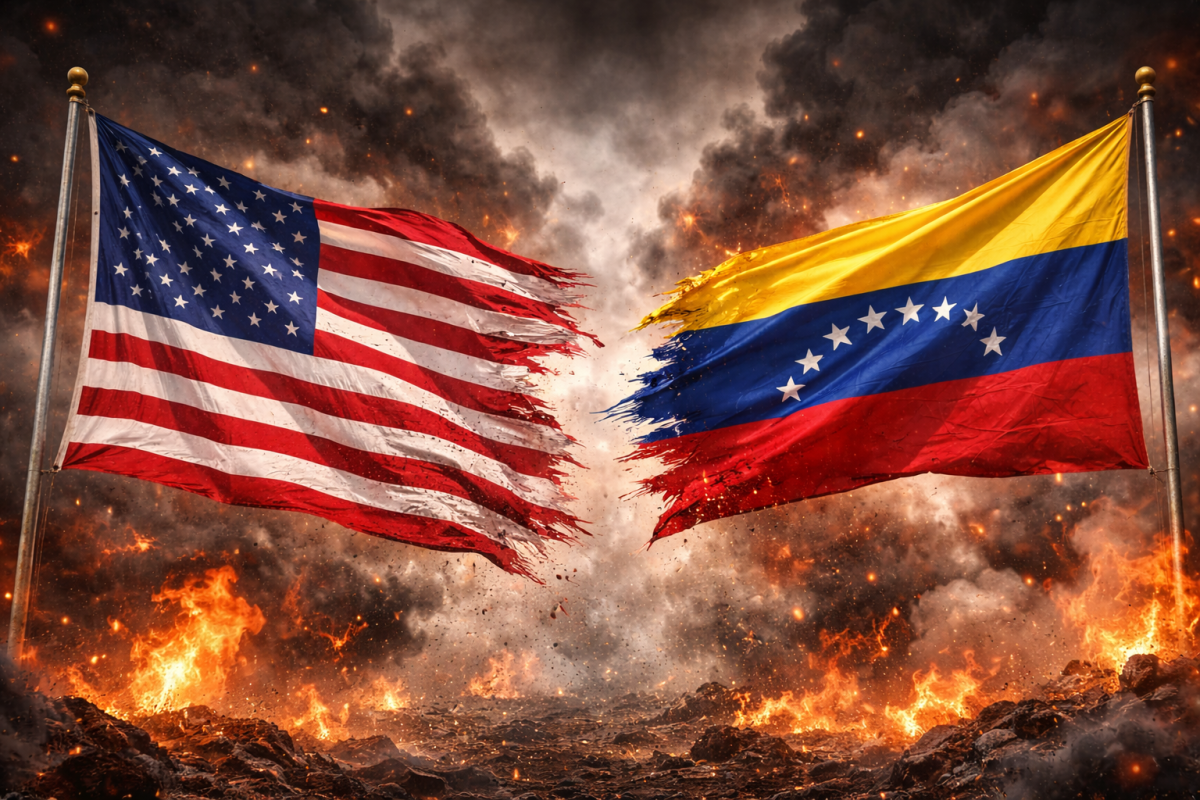

Conflict continues to plague the middle east in the weeks following the joint American-Israeli strikes against Iran on February 28th, resulting in the death of several political figures including Iran’s Supreme leader Ayatollah Ali Khamenei.
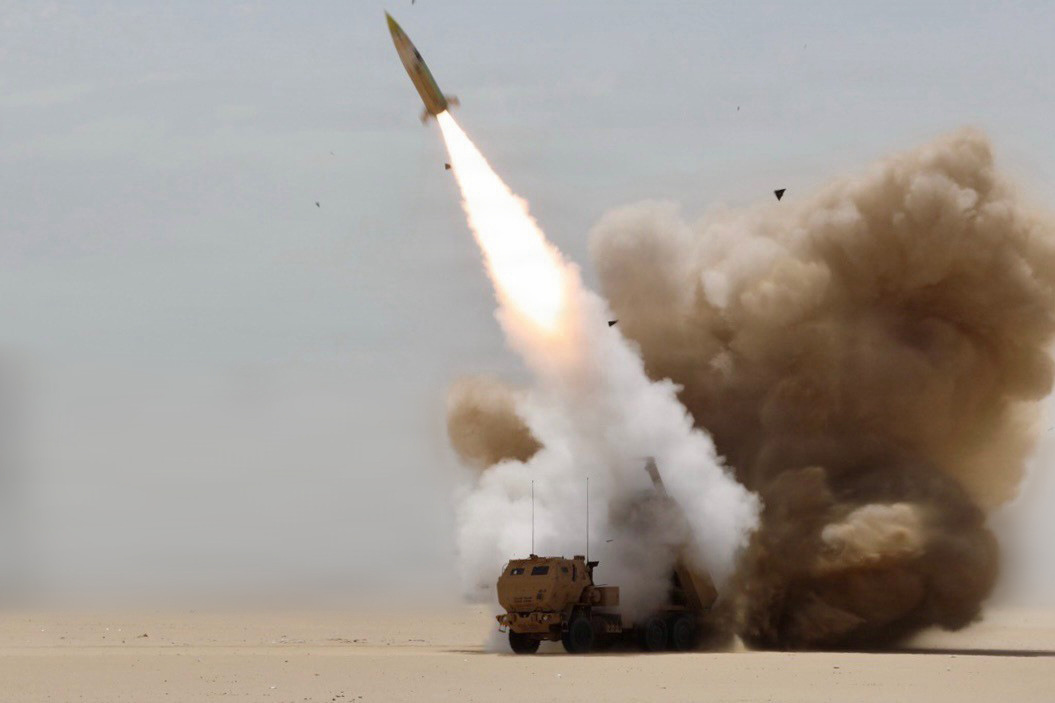
The conflict between America and Iran began with a series of widescale strikes on Iranian military and political leadership. This was the first wave of the so-called “Operation Epic Fury”, and it saw many commanders of Iran’s Islamic Revolutionary Guard as well as the Supreme leader Ayatollah Ali Khamenei killed. President Trump outlined several reasons for starting the war including: destroying Iran’s missile capabilities, destroying the Iranian navy and airforce, stopping Iran from developing nuclear weaponry, and attempting to stop Iran’s continued funding of terrorist groups. While regime change has not been an official goal of the US led operation, it has been heavily hinted at by Trump, with him urging Iranians to “take over your government” following the killing of Khamenei.
By Hanay – Own work, CC BY-SA 4.0
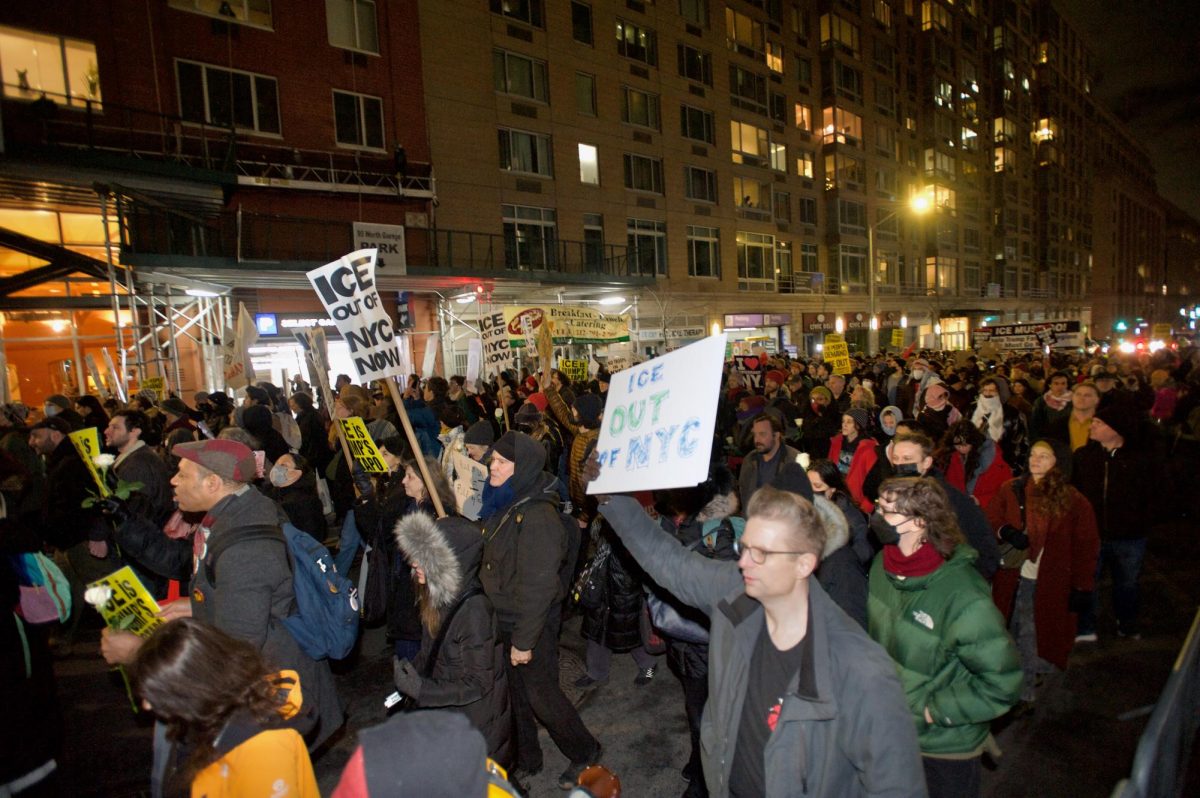
Democrats are heavily against the US’s involvement in Iran as are most Americans according to a CBS poll. Republicans continue to advocate for the war and say that it could lead to better peace in the future.
The conflict continued to escalate further as Khameinei’s son Mojtaba succeeded him as leader on March 8th, with strikes expanding to wider military infrastructure, oil refineries, and alleged nuclear development sites such as the Shahid Ahmadi-Roshan Natanz uranium enrichment complex. Iran would retaliate if necessary with their own strikes, “targeting U.S. military facilities, as well as energy and civilian infrastructure in the Gulf states” according the Council on Foreign Relations.
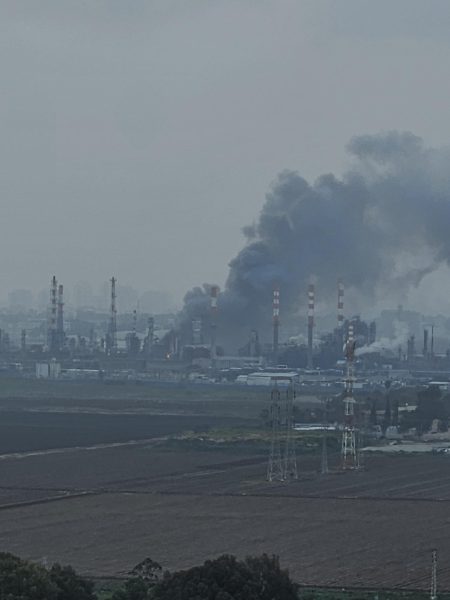
As of now, there appears to be no end in sight for the War in Iran, with some plans even laying out potential American troop deployments to Iran and Iran planning to expand its retaliation to key civilian infrastructure such as desalination facilities in the Gulf nations. The war has already expanded its reach in the Levant where Israel has begun launching massive ground and air strikes on Lebanon, saying that these strikes are targeting Hezbollah and leading to fears of a full Israeli invasion of Lebanon. While death tolls as of now are hard to estimate, the total is believed to be in the thousands, with Iranians making up the vast majority of these casualties.
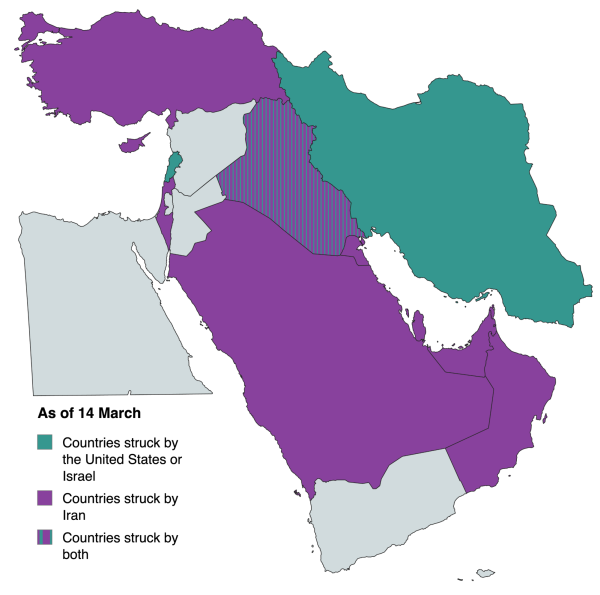
Ganesha811, CC0, via Wikimedia Commons
Many have also stated that this war isn’t necessarily about regime change with Ezzedine Fishere saying in a Dartmouth panel that “I think I can make a case that the U.S. is not really interested in regime change or in regime collapse … but a change in the course of the regime.”
Iran has recently shifted their strategy to blocking off the Strait of Hormuz, attacking any oil vessels going in and out of the strait, which has skyrocketed global oil prices and transformed the war into an international crisis. The closure of this strait and Iran’s threat to close it indefinitely is now a key issue of concern for the war, especially if the US bombs key power plants in Iran. The Strait is responsible for the transport of more than 20% of the world’s oil supply. Its closure is already causing a massive spike in oil prices, however if it were closed for an extended period of time, we would begin to see oil prices rise exponentially.
The stock market also has been impacted by the war, with the Nasdaq entering its fourth consecutive negative week, and many traders have warned of a two-week deadline for the strait to be opened to prevent more severe economic consequences. President Trump presented Iran with an ultimatum to reopen the Strait, however Iran responded with several strikes against Israel and deployed a mass of sea mines across the Persian Gulf. Despite the incredible amount of strikes against Iran’s military, they still possess the means to strike back and retaliate, especially since naval ships are left vulnerable crossing the Strait of Hormuz.
Many Americans see the war as unnecessary or as something that should have been avoided.
According to Politico, Democratic Senator Mark Warner, criticized the recent military actions against Iran, saying, “I saw no intelligence that Iran was on the verge of launching any kind of preemptive strike against the United States of America.” Warner called it instead a “war of choice.”
As the war continues, we will begin to see more and more effects on the American public such as lower gas prices and increased travel restrictions. Already, gas prices are up to nearly $3.47 on average, and these prices continue to rise day by day.
Americans have also been receiving mixed messages about the war with Trump saying that the war is “Very complete, pretty much.” Trump has also stated that the US is “Very ahead of schedule.”
However, on the same day that Trump said that the war was almost over, the Department of Defense stated that, “We have only just begun to fight.” This has led to many being concerned about the state of the war and how it is progressing. Now with the war progressing, talks of a potential deal between the US and Iran have begun.
Earlier this week, Trump stated that Iran and the US had held “Very good and productive conversations.” However, Iranian officials mocked the claim saying that Americans had been “Negotiating with themselves.”
While it seems like a deal is out of reach in the immediate future, a BBC article shed some light on Iran’s mindset when it comes to these deals saying, “Over the past year, talks between the two sides have twice raised hopes of easing tensions, with the last round said by their Omani host to have addressed key US concerns about Iran’s nuclear programe. Both times, they were followed by Israeli and US military strikes on Iran. From Iran’s point of view, talks have not reduced the possibility of war; they have come just before it. That is why Trump’s claims are being treated with suspicion.”
With actions of war coming so soon after peace talks, it is unlikely that we see a conclusion to this war anytime soon.