


The hantavirus is sweeping the world spreading from person to person as the outbreak from the cruise ship continues to ravage the world’s population as the virus threatens to destroy everything and take over society. At least that’s what people online are saying could happen. However, in reality, only 13 of the cruise passengers are infected with the slow spreading virus according to the WHO.
The hantavirus outbreak, which started in early April before being reported to the World Health Organization on May 2nd, is a virus that is difficult to spread from person to person resulting in a slow-moving but potentially fast-killing virus.
Dr. Brendan Jackson said during an interview with NBC that “When [Hantavirus spreads] it typically involves household members that are doing things like sharing beds or sharing eating utensils or having contact with bodily fluids.”
With the virus being respiratory based, this means that unlike COVID-19, it is much harder for the virus to spread quickly to multiple people at once.
In fact, the way most people get hantavirus is by inhaling or somehow ingesting particles from rat droppings or urine. According to NBC, “Just 2% to 5% of all cases are estimated to stem from person to person transmission.”
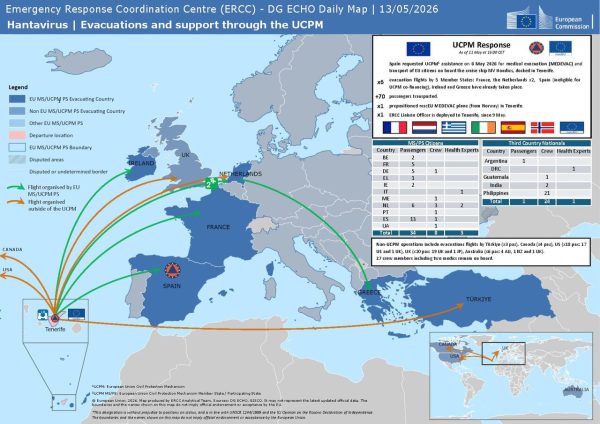
Photo courtesy of Wiki Commons, CC by 4.0
Unfortunately, this number could continue to climb as more cases are being documented after an infected couple became ill aboard the MV Hondius cruise ship in late April 2026. There were three casualties reported in connection with the Andes virus that affected several passengers aboard the ship. Experts are comparing this case to a “speedster” case in Argentina which resulted in 34 cases and 11 deaths between 2018-2019.
Hantavirus has had a very short history in the US. In fact, according to NBC, “Fewer than 900 cases were reported in the US from 1993 to 2023.”
The virus’s inability to spread quickly is one of our greatest weapons to use against it as experts in the medical field work to contain it by enforcing quarantines for infected or exposed patients. In spite of the low percentage of transmission, the hantavirus is a very fast killer with NBC reporting “Up to half of Hantavirus cases can be fatal, depending on the strain.”
Despite the hantavirus’s deadly nature, its inability to spread quickly is its biggest weakness. People who are exposed to the virus are advised to quarantine for 42 days according to the Guardian. After this time, the virus won’t be able to spread anymore and people will be safer and well-protected.
This 42-day quarantine is not set in stone and some people are not following the advice of medical experts. In the US, people who are exposed to the virus are required to quarantine, but they can quarantine in their homes. In spite of contact tracing, this leaves it up to the individual to follow the suggestions of doctors. This has led to many citizens fearing that the quarantines might not protect the general public. There are many reasons that people are wary of this approach with many citing a fear of contact with family members that could spread the virus as they go out to shop or to work.
According to NBC, “Health departments have said they are in regular contact with passengers as they monitor for symptoms.”
Hantavirus is being closely monitored and the world is being vigilant to avoid another pandemic. Combined with its low probability of becoming a super-spreader and our increased efforts to contain the hantavirus, it is unlikely that the illness will develop into something major.