
The holidays are approaching fast, which for some means spending time with family, eating a traditional holiday dinner, going caroling, watching Die Hard, and giving presents, but not all cultures celebrate the holidays the same way. In other countries, you’ll notice different traditions or even different Santas and variations of iconic holiday symbols.
Mexico:

In Mexico, there is a reenactment of the journey of Mary and Joseph where individuals will knock at peoples’ houses, sing, and ask to go in for shelter, but some houses will refuse until a house will let them in. It starts on the 16th of December through the 24th of December. Growing up in my home, we took part in this tradition, but instead of going into the houses, we would just stand outside of my grandmother’s house and sing at the door twice. Once for the rejection and then once for the acceptance. Then, we would have fun, play games until 12 am, and open presents from relatives. On Christmas morning, we opened presents that are under the tree. We would also celebrate three kings day on the 6th of January where we would cut some bread. In our tradition, that means cooking for the whole family.
Japan:

Photo courtesy of OpenAI
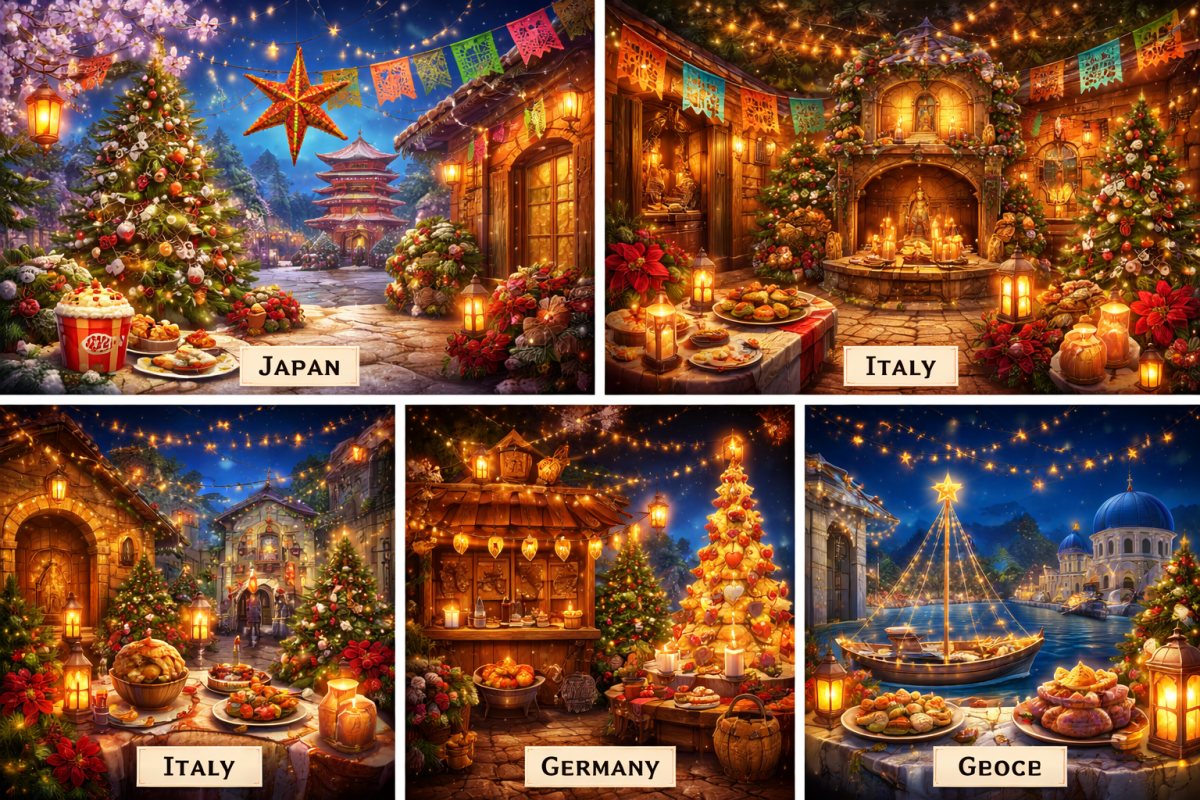
In Japan, Christmas is not recognized as a national holiday, but there are some unique traditions that you can find here as well. For example, around Christmas time, Japanese people often eat Kentucky Fried Chicken. Yes, that is correct, during the holidays, the Japanese eat fried chicken due to a promotion that happened in the 1970’s saying “Kentucky for Christmas.” The commercial got so popular that the tradition stuck, and now, it is culturally acceptable to eat Fried Chicken during Christmas dinner.
Another interesting aspect of Christmas in Japan is the fact that Christmas Eve resembles the American version of Valentine’s Day, with couples enjoying a romantic dinner together on December 24th. Gift-giving still takes place, but it is typically just between close loved ones.
Germany:

Photo courtesy of OpenAI
In Germany, there is someone more popular than Kris Kringle himself, and this figure is known as the Krampus. Krampus is an anti-Santa of sorts. He punishes bad kids and is half demon, half goat. His name comes from the old German word Krampen, which means claw. He punishes bad kids while Santa Claus rewards the good kids. There is usually a timeline of when Krampus and Santa comes. On December 5th, they have Krampusnacht where it is the eve of St. Nicholas day. Then, on December 6th is St. Nicholas day. If the German kids were good, then St. Nicholas would leave a present in their shoes.
Greece:

Photo courtesy of OpenAI.
In Greece, they have a similar approach to Krampus, but instead of a demon scaring kids into behaving nicely, they have Kallikantzaroi which are 12 goblins that are short with a hunched back and red or black eyes and they are always grinning or sneering. They come during the 25th of December through the 6th of January, and then after the 6th, they live underground for the rest of the year until the cycle starts all over again. They all cause mischievous things to happen such as spoiling food and wine, putting out fires, tangling yarn and tools, and knocking on doors pretending to be friendly. At times, you have to protect yourself by burning Christmas logs, hanging garlic or old shoes by doors, keeping a fireplace burning throughout the night, and finally, bringing a priest to bless the home on epiphany, which is the manifestation of Jesus when the goblins run underground and hide throughout the year.
Italy:

Photo courtesy of OpenAI.
In Italy they have a witch called La Befana who is an old lady wearing a black shawl and a patched dress with soot all over her face from the chimney. She rides on a broom and gives children gifts on epiphany eve. If you were good, she will give you sweets and toys like Santa Claus, but she gives kids coal if they have been naughty. Kids hang their stockings in Italy on the 5th of January. The broom isn’t just La Befana’s way to get around. She uses it to sweep away things such as the old year, bad luck, and mistakes and this act represents renewal.