Get ready to ride, as we go galloping into the Lunar New Year in the year of the Fire Horse. Lunar New Year is an important time in Chinese culture as many features of said culture take center stage, with traditions such as lion and dragon dances, reunion dinners, firework shows, red envelope gifts, and the symbols of the zodiac. These traditions play an important part in Chinese culture and the Lunar New Year tradition.

By Jakub Hałun – Own work, CC BY-SA 4.0
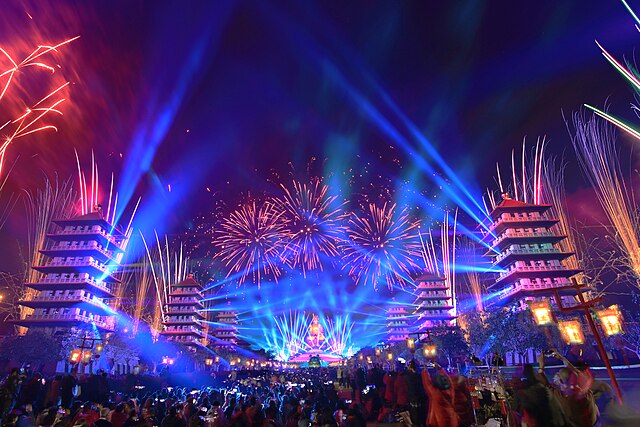
China’s vast culture contains several traditions that have spanned over a thousand years. One of these traditions is the many firework celebrations that happen on birthdays, important life moments, or on day of the Lunar New Year of course. According to North Central Industries, fireworks originated in order to “frighten away evil spirits with their loud sounds.” Fireworks evolved into a festival tradition to introduce the new year. Now, the tradition continues today with elaborate firework shows that include incredible colors and displays of Chinese ingenuity.
One of the more well known traditions of the Lunar New Year are the famous red envelopes. Whilst many see this tradition as nothing more than goodies or money in nicely wrapped packages, this gift holds much more significance than that. Known as hóngbāo, the gifting of red envelopes to younger generations signifies goodwill and support from older generations to the younger generations, with the younger generations subsequently paying respect to the older members of the family
Author Sarah Coleman articulates this in her book Lunar New Year, stating that it “is a carefully choreographed dance of respect, affection and well-wishing.”
The envelopes’ colors also hold meaning, with red in Chinese culture being seen as the luckiest and most favorable color, with further decorations of gold letters and Chinese symbols like the dragon seen as increasing the luck. While there is no set value of money in the red envelopes, the money is always crisp and clean, as well as seeing amounts that either contain six or eight, seen to bring more luck.

By Zarate123 – Own work, CC BY-SA 4.0
Another tradition that takes place during the Lunar New Year are the many Lion dances. The dances, thought to give good luck to all, are very elaborate with two people working in order to control one lion. The lion, thought to bring luck, prosperity, power, wisdom, and superiority, dances to music played on drums, cymbals, and gongs. Over the years, two different styles of lion dance have developed. The Northern lion dance and the Southern lion dance. The Northern dance has a deep relationship with martial arts and the costumes are often less decorated in order to allow for more movement. These dances often involve jumping, rolling or even climbing in their performances to highlight the power of martial arts and the lion.
Chinahighlights recommends that “the best places to see Northern Chinese lion dances are China’s Martial art theaters like the Red Theater.”

CC BY-SA 4.0
The second type of dance is much more well known- the Southern dance. This dance often focuses on the lion itself, emulating the movements of a lion in nature, and often this includes scratching, shaking, and even playing with props. Because of this, these shows often appear comical. This is the dance style often used on the Lunar New Year itself.
A prominent feature of the Lunar New Year is of course family reunion dinners. Known as nian ye fan, this tradition is often seen as the most important among families, as for many it is often the only part of the year they can see all of their families. Many of the foods cooked are also believed to bring luck or other positive effects, with Jiaozi, or dumplings, being the most famous that represent wealth or the many dishes surrounding fish, meant to symbolize abundance.
Another prominent feature of the Lunar New Year is the animal-based zodiacs, with the zodiac for this New Year featuring the fire horse, which carries a very special meaning in many east Asian cultures. It is the first time this specific zodiac has emerged in 60 years, as Chinese astrology cycles through 12 signs each year, represented by animals, as well as one of five elements every two years.
The fire horse carries a very special meaning for many, with spiritual author Helen Ye Phlen stating that the horse is “known for freedom, enthusiasm, intelligence, and a strong drive for movement and progress” with people born in the year of the horse tending to be “social, adventurous, and self-directed, though they can resist restriction or routine.” The fire meanwhile represents intensity and passion, as fire “intensifies whatever sign it touches, bringing courage, leadership energy, and emotional intensity. Fire years tend to feel more dramatic, fast-moving, and action-oriented collectively”.







Ms. Cawley • Feb 25, 2026 at 9:03 am
I learned so many things from this article! Very interesting and well-researched.