

As the holiday season moves ahead full speed, many people have decorated their living spaces with a myriad of symbols and icons representing various holidays they celebrate.
The holiday season is the time we recognize a variety of seasonal celebrations ranging from Christmas, to Hanukkah, and Kwanza among others. All traditions are important to the people who celebrate them and are times of gifts and goodwill between families, friends, and those who celebrate. Each aforementioned holiday contains many long-running symbols and traditions that define them but have become so commonplace that we rarely stop to think about the origin of each.
Christmas:

Christmas has many well known traditions, with some that even date back thousands of years. One of the most well-known is the tradition of putting up a Christmas tree near the start of the holiday season. But when exactly did this tradition start and why? According to History.com, “The origin of Christmas trees stretch all the way back to the use of evergreens in ancient Egypt and Rome. Germany is credited with popularizing candlelit Christmas trees as we know them today.”
The tradition of putting a tree in your house during winter actually starts before the start of Christianity. People believed that the trees that stayed green all-year-round would drive off evil spirits and ward off witches. It was only after the Protestant Reformations that Christians started to display trees in their homes. Since then, the tradition has evolved from using candles and nuts to decorate the tree to the modern traditions today where trees are decorated with ornaments and festive decor.
As the date for Christmas gets closer, many consume another iconic symbol of Christmas, the humble delicacy known as the candy cane. According to Readers Digest, legend holds that candy canes were invented by a choir master to “keep choir boys occupied during their services on Christmas” with the iconic shape based off of a shepherd’s hook which was meant to symbolize Jesus as “the shepherd of his followers”. The colors of red and white are meant to represent the blood that Christ shed for humanity as a symbol of his love and sacrifice along with white representing the purity and holiness associated with the birth of Jesus. The three smaller stripes on the candy canes represent the Holy Trinity.
Hanukkah:
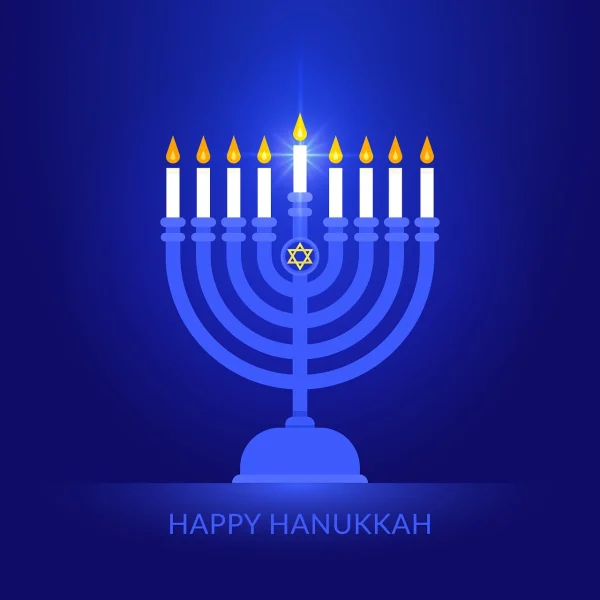
Hanukkah also has many well-known traditions and symbols, one of which is the emblematic symbol of the holiday, the Menorah. Hebrew for lamp, the eight-flamed candle according to Chabad.org originated from when Judah the Maccabee led a revolt against the Seleucids, defeating them and reconquering the holy land. When the priests then went to light the menorah, all they could find was a singular cruse of greek olive oil, which wound up lasting for eight days. This lead to the priests commemorating these miracles with Hanukkah. Each day of Hanukkah sees a candle on the menorah lit by another candle called a shamash.
Another notable symbol of Hanukkah is the iconic dreidel game. The dreidel game dates back to around the 1720s where it acted as a gambling game for Europeans in England and Germany. However, there are other explanations for the dreidel’s origins in the Hanukkah story. According to myjewishlearning.com “The standard explanation is that the letters nun, gimmel, hey, and shin, which appear on the dreidel in the Diaspora, stand for “nes gadol haya sham” or “a great miracle happened there.” This explanation ties the dreidel into the Hanukkah story by referencing the miracle of the oil lasting for eight days in the temple. There is yet another explanation, however. Some believe that Jews during this time used the dreidel to fool Greeks if they were caught studying the Torah. Regardless of its origins, the dreidel remains an iconic symbol in Jewish culture today.
Kwanzaa:
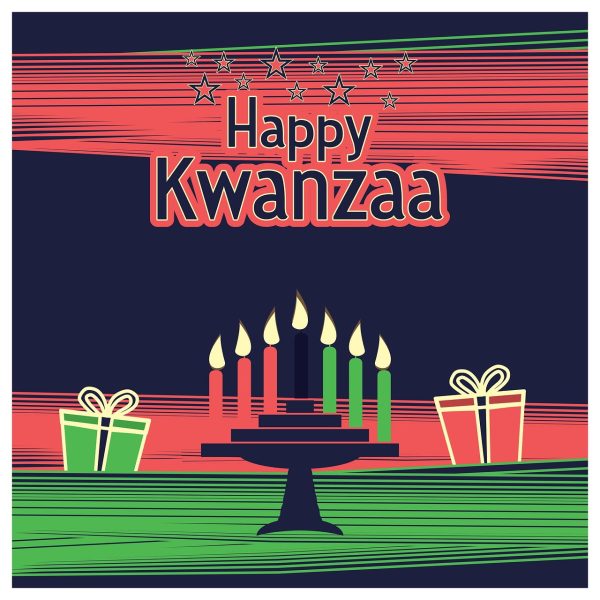
Kwanzaa also has some interesting symbols associated with the holiday, with one of these being the Mishumaa saba and the Kinara. The Mishumma saba (the seven candles in English) is a set of seven candles that are red and green, while the Kinara is the holder they are placed in. The Kinara is a symbol for the African people and their roots. According to the Official Kwanzaa website, the Mishumma saba is “The matrix and minimum set of values which African people are urged to live by in order to rescue and reconstruct their lives in their own images and according to their own needs.”
Another important symbol is also the Kikombe cha Umoja (The Unity Cup), which according to Seven Symbols of Kwanzaa is meant to serve as a symbol of unity, first of the seven principles of Kwanzaa. The cup reminds people that the strength of a community comes from the unity of its people, with each person taking a drink from a cup during Karamu, symbolizing not only their commitment to unity, but also the shared bond between families and communities.